THE MANMATHA LEGACY
A retreat built for returning inward.
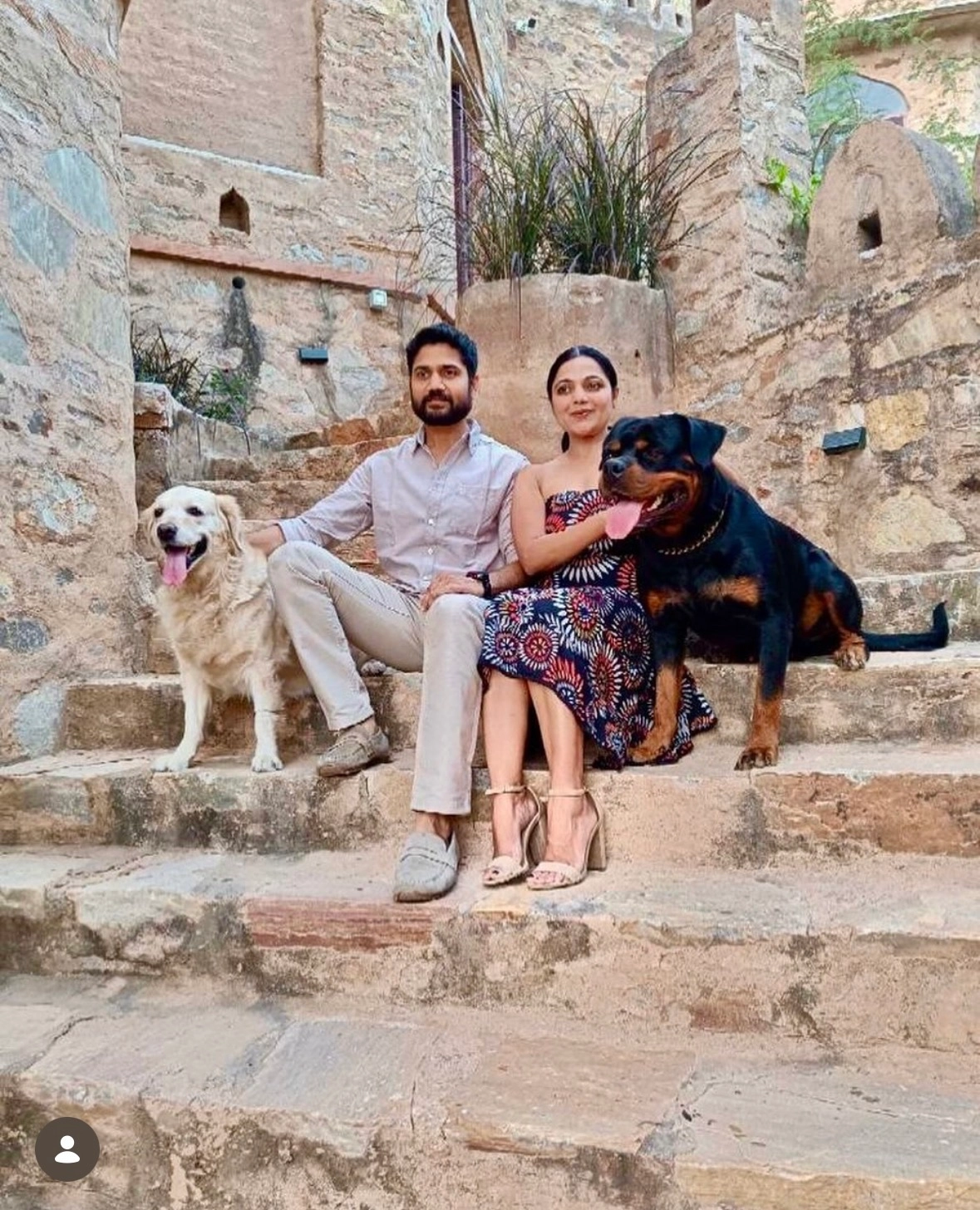
Aakanksha & Priyank Tomar · Founders, Manmatha
The founding
Manmatha began as a personal refuge — imagined as a place for pause, for stillness, for returning to a rhythm that modern life has almost forgotten.
Envisioned and curated by Aakanksha and Priyank Tomar, the estate was conceived not as a hospitality project but as a sanctuary. The couple’s vision was rooted in an eco-conscious sensitivity — working in harmony with the land, its natural contours, and the surrounding Aravalli landscape. Every choice reflects a quiet respect for nature, balance, and intention.
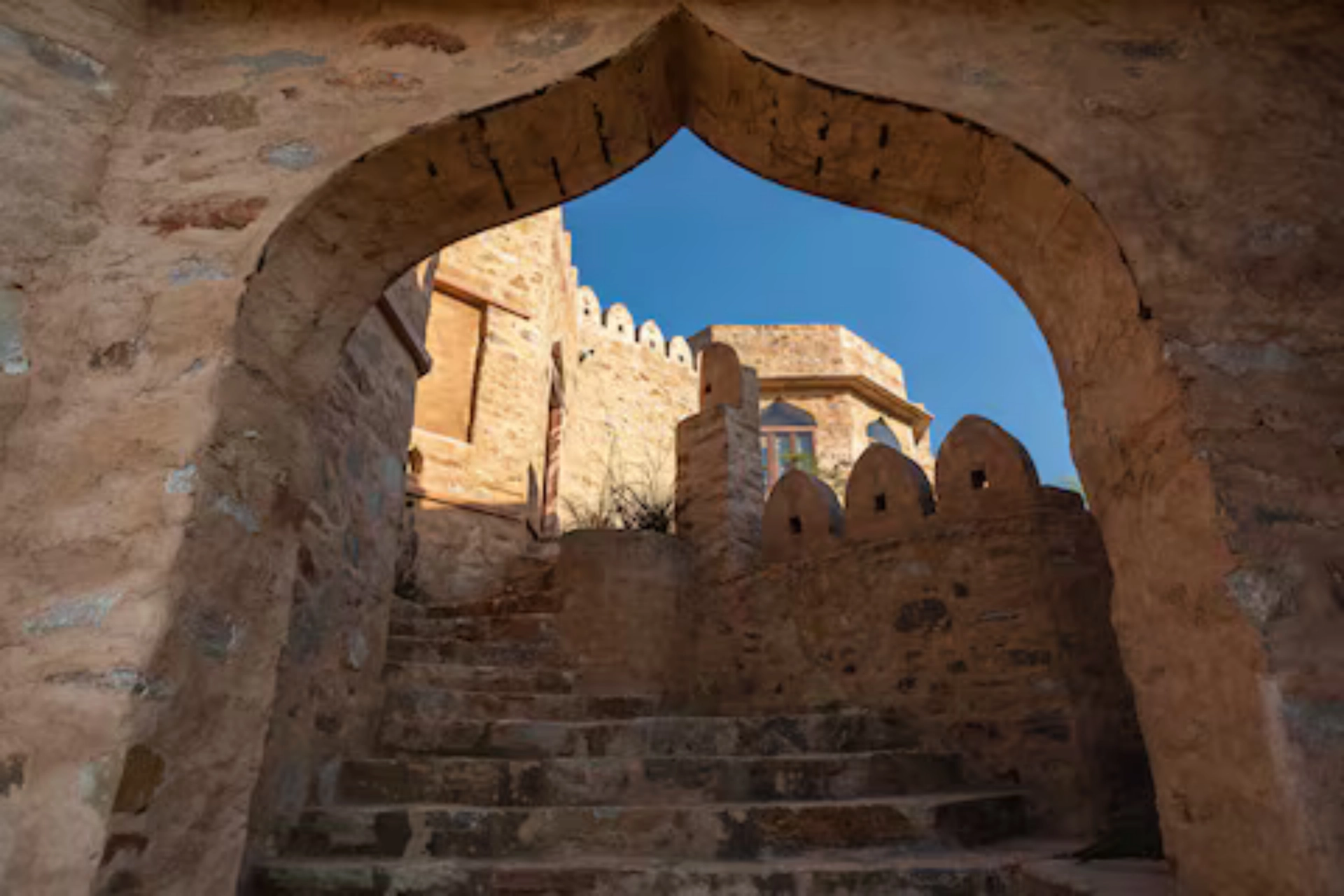
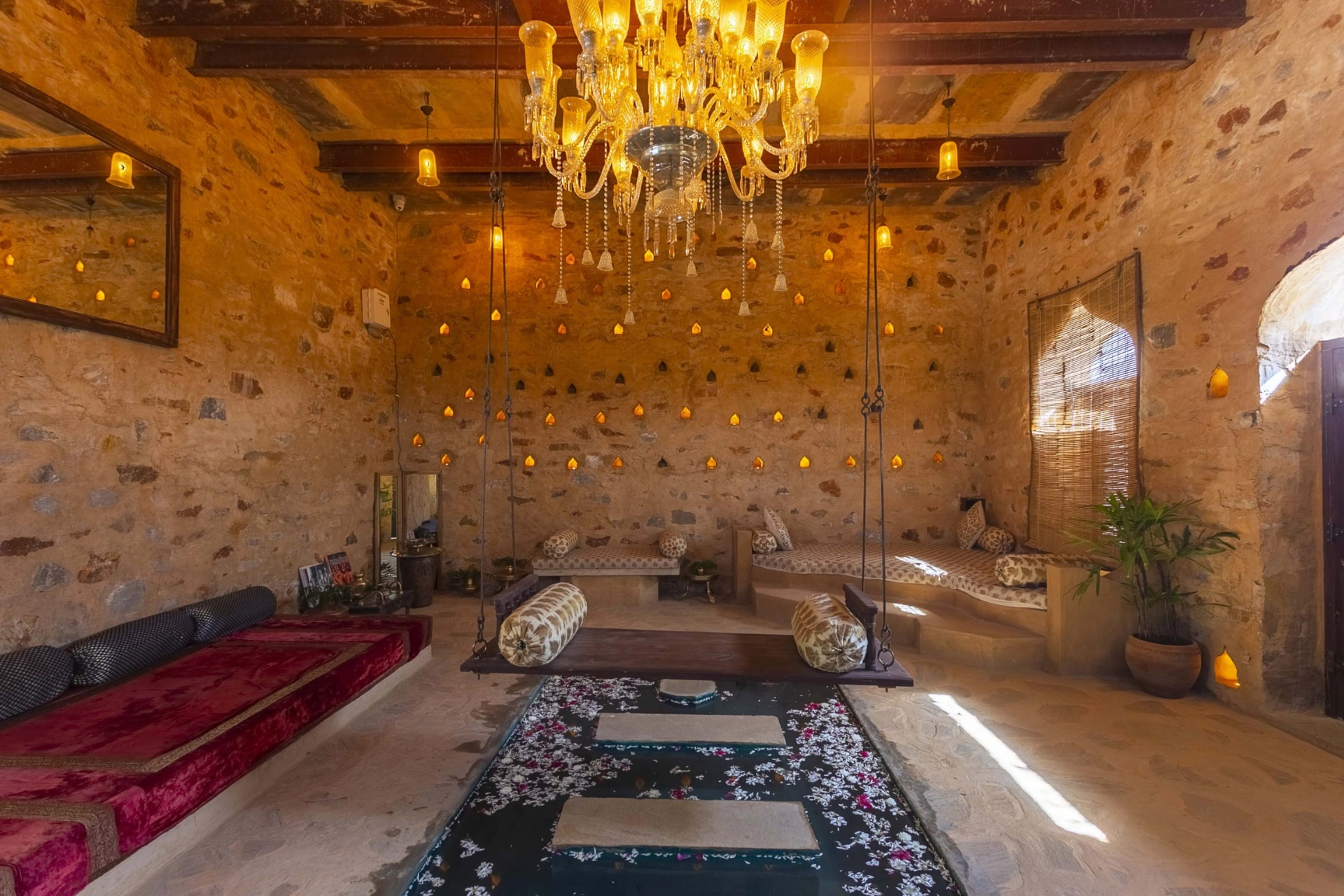
The uneven floors are deliberately so — encouraging guests to watch their steps, to look up, to move with awareness. The courtyards are shaped around natural light rather than formal symmetry. The stone breathes. The arches frame views that were already there. Nothing was imposed; most of it was revealed.
In 2025, Manmatha was welcomed into Raht — a portfolio of boutique Indian estates where the same values had already taken root. The Raht name brought operational depth and wider reach. Aakanksha and Priyank’s vision remained unchanged. Only deepened.
"Luxury does not need to announce itself. It can be private. It can be slow. It can be deeply personal."
The Raht philosophy
The name
Manmatha — the god of love, passion, and desire.
In Hindu mythology, Manmatha — also known as Kamadeva — carries five flower-tipped arrows, each designed to guide the senses toward beauty, longing, and awakening. At this estate, those ideas are interpreted inwardly.
Love becomes intention. Desire becomes awareness. Passion becomes stillness. The rooms, inspired by the arrows of the deity, unfold gently — each space guiding the guest not outward into distraction, but inward toward presence.
The four suites bear the names of the four types of women described in classical Sanskrit texts on love: Shankhini, Chitrani, Ratimohini, and Kumudini — each with her own temperament, her own quality of light.